
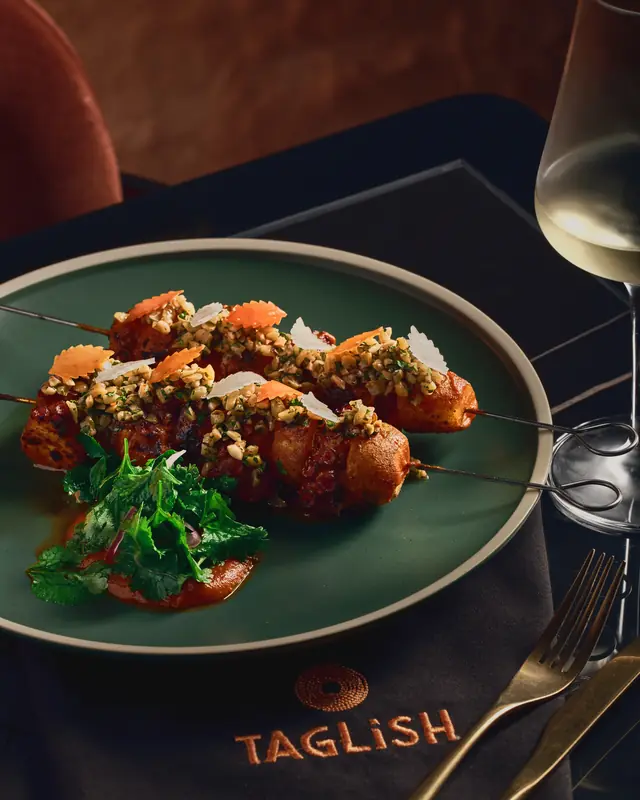
Sulu pugita
1,350
Octopus from the Sulu Sea, held over the embers until the edges char. Pili gremolata and a calamansi sofrito underneath.

Filipinos have always eaten seafood best in the open air — picking the fish yourself, handing it to a cook, then tearing into it over rice with everyone reaching into the middle. Taglish keeps the appetite of that meal and changes the room around it.
A sosyal na dampa. You are welcome to use your hands. Nobody will make you.
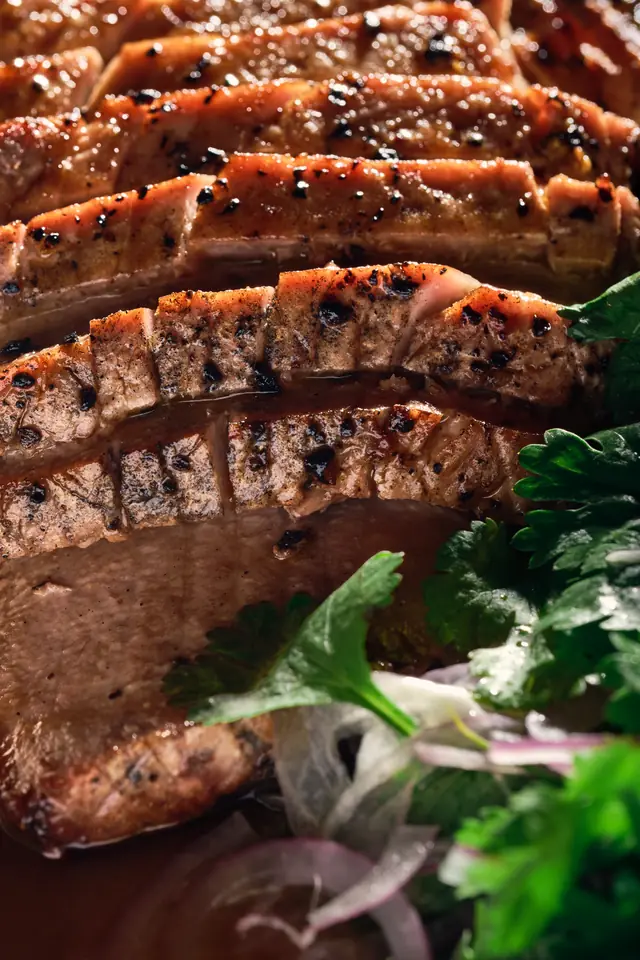
Everything meets fire first. Skewers of Sulu pugita and Gensan tuna go over the embers next to dry-aged beef, so the catch gets the attention usually reserved for a steak. That is the whole argument of the room, and the reason the tuna is sold by the porterhouse.
The provinces stay on the menu where they belong: crab from Guimaras, diwal from Negros, boquerones from Balayan, tuna from General Santos.
Every fish carries the province it came from. If it can be caught here, it is not imported.
Live fire is the only through-line between a langoustine skewer and a 1.3kg tomahawk.
Brunello, Jonata, Cristom — bottles worth a whole evening, poured one glass at a time.
A lumpia bar, eight-day dry-aged tuna kilaw, and wagyu buried in snow for 32 days.
Three plates that explain the room. The rest of the kitchen is in the gallery.
1,350
Octopus from the Sulu Sea, held over the embers until the edges char. Pili gremolata and a calamansi sofrito underneath.
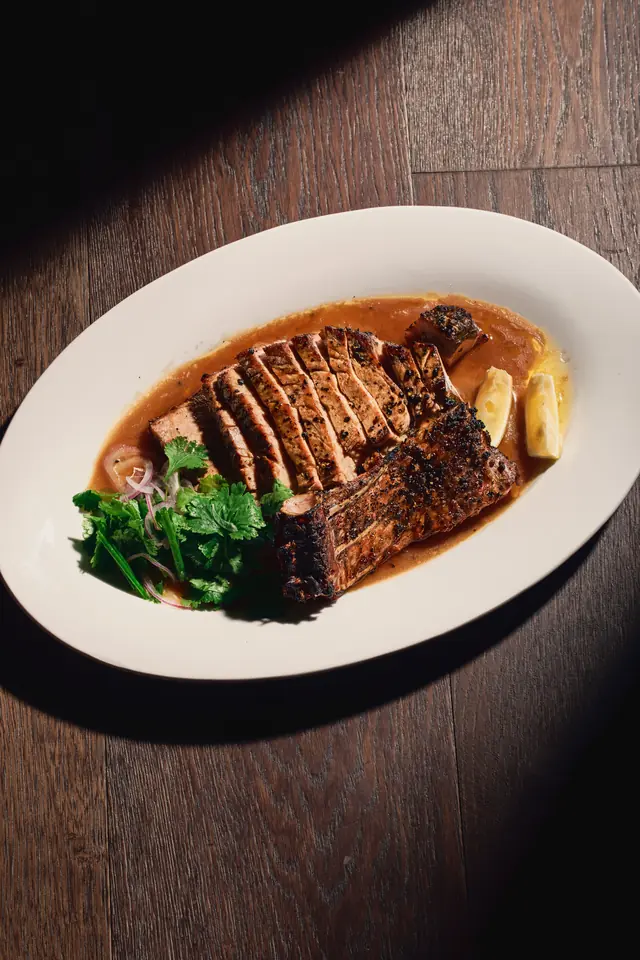
3,700
The argument of the room. Tuna from General Santos, cut on the bone and cooked with the attention usually saved for beef. Tamarind brown butter, capers.
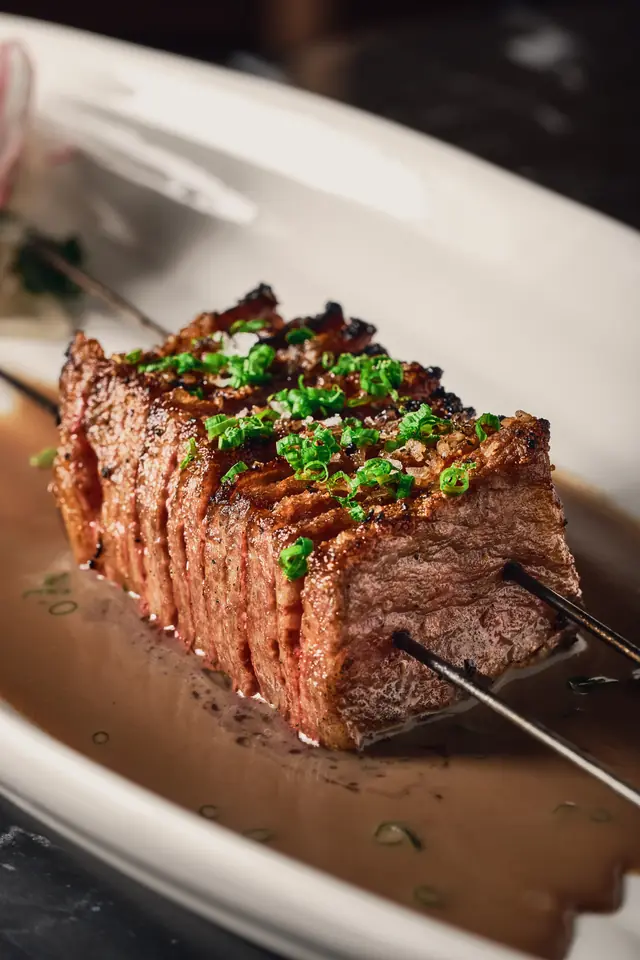
From 450 an ounce
Five prefectures, four ounces minimum, two pieces to the ounce. Kumamoto through to Ohmi, with snow-aged Niigata in between.
Three pieces. Sharp cheddar, hot honey, chives, maldon salt.
Chili garlic, horseradish, banana cocktail GF
Citrus milk, avocado, jalapeño GF
Asian pear, EVOO, bagsik vinegar GFDF
Citrus mignonette, cuke balls GF
Mustard espuma, potato salad GF
Horseradish cream, chili garlic GF
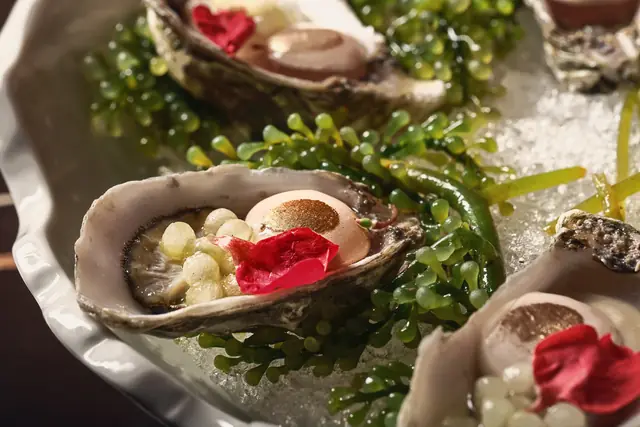
Crab cocktail, whole lobster, local shrimp cocktails, a kilaw sampler and a selection of seasonal imported oysters.
For some
11,500
For many
19,500
Blue crab, chives, mascarpone
Everything spice, labneh
Sumac, sesame, mint VDF
One each of salmon, crab and eggplant
Seasonal fresh greens, citrus supremes, EVOO VVegan on request
Sourdough crumble, boquerones, egg yolk jam, EVOO Vegetarian on request
Tocino bacon, teardrop pepper, forme d’ambert Vegetarian on request
Truffle aioli, sweet chili VGVegan on request
Tocino lacquer, dill, lemon zest GF
Pecorino, saffron, bottarga
Polenta, fried saba, leeks
Nduja, citrus crumble, sourdough
Calabrian chile cream, basil Vegan on request
Everything here goes over the embers.
Local seafood skewers
Pili gremolata, calamansi sofrito GFDF
Chili toum, agrodolce GFDF
Sweet soy, citrus salad, chive toum DF
Gensan tuna
Tamarind brown butter, capers GF
Tamarind brown butter, capers GF
Miso honey, house greens DF
Premium & seasonal
Romesco, agrodolce
Saffron mornay, sautéed spinach
Scampi, citrus crumble, charred lemon
Priced by the ounce. Four ounces minimum, two pieces per ounce.
Kumamoto Prefecture. Smooth, sweet, buttery finish.
Kagoshima Prefecture. Grass fed on the southern island of Kyushu, intense umami.
Oita Prefecture. High-grade free-range Bungogyu cattle.
Shiga Prefecture. Limited allocation, balanced between lean and marbled.
Niigata Prefecture. Held in a yukimuro for 32 days at 90% humidity.
All five prefectures, one piece each.
1,400
per person
Classics · served with truffle butter
Certified Angus Beef, USA. The deckle — the best portion of the ribeye. GF
Certified Angus Beef, USA GF
Certified Angus Beef, USA GF
Dry-aged · served with brown butter
28 days. Dierendonck, Belgium — cave-aged in a 200-year-old room. GF
32 days in a cold chamber, using snow as the cooling agent.
32 days. Dierendonck, Belgium. GF
Wagyu cuts · served with wagyu tallow
Kumamoto Prefecture GFDF
VIERE, Ireland GFDF
Westholme, Australia GFDF
Cauli puree, cashew gremolata VGVegan on request
Lemongrass sprite, bagsik vin GFDF
Chive garlic toum, house salad GF
Nuts and raisins, scampi sauce, parsley GF
Koshihikari VG
Sushi rice, garlic chips VG
Tamarind glaze, citrus crumble V
Laing puree, coconut cream VG
Labneh, makrut, ponkan VVegan on request
Truffle aioli, parmesan V
Grapes, parsley, tamarind, sesame VVegan on request
Lemon, pili gremolata VG
Purple pea, lemon calamansi
Evian sparkling, banana essence
Cantaloupe, lime syrup, Topo Chico
Pineapple cinnamon compote, sparkling
Simple syrup, Topo Chico
Coke, Coke Zero, Sprite, ginger ale
Crazy Carabao
San Miguel
Tequila, Cointreau, lime, jalapeño
White rum, lime, mint
Vodka, cranberry, Cointreau
Vodka, tomato, house spice
Amaretto, bourbon, lemon
Gin, Campari, sweet vermouth
Bourbon, demerara
Mauban lambanog, seasonal citrus
Tanqueray gin, dry vermouth, sampaloc
Taglish brine, dry vermouth
Grey Goose, vermouth, jalapeño
Grey Goose, Cointreau, ginger tea
Ketel One, Kahlúa, kapeng barako
Aperol, rum, prosecco
Sparkling, orange, Cointreau
Mezcal, calamansi, togarashi
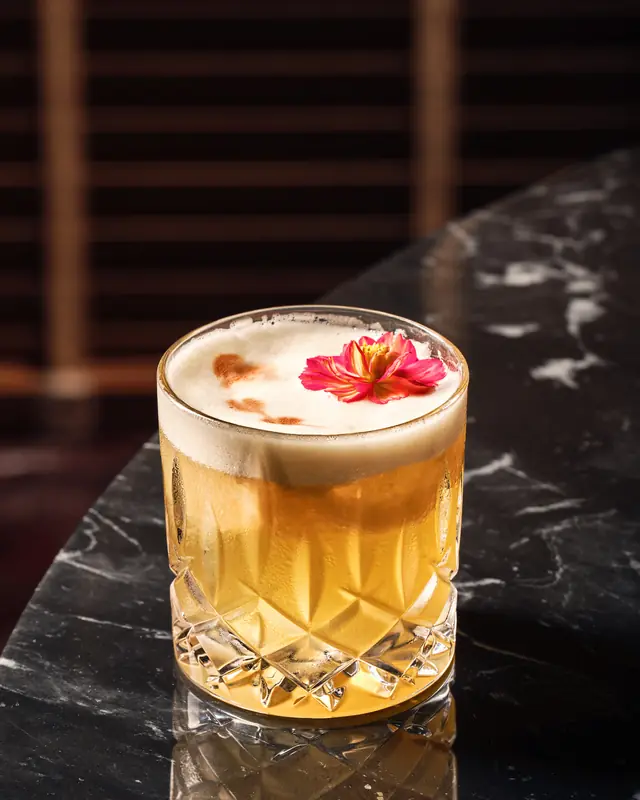
Choose one martini and we bring it to the table cold, with everything it needs.
For some
1,050
serves 2
For many
1,650
serves 3–4
Sparkling
White
Red
Poured by the glass without pulling the cork.
White
Red
Ask for the full wine list
Ube, banana, nata, pinipig, sago
Date nut, langka gel, salted pecan
Choco crunch, shoyu caramel, dark chocolate ganache